Catan vs Carcassonne: Best Board Game for a Family of Five
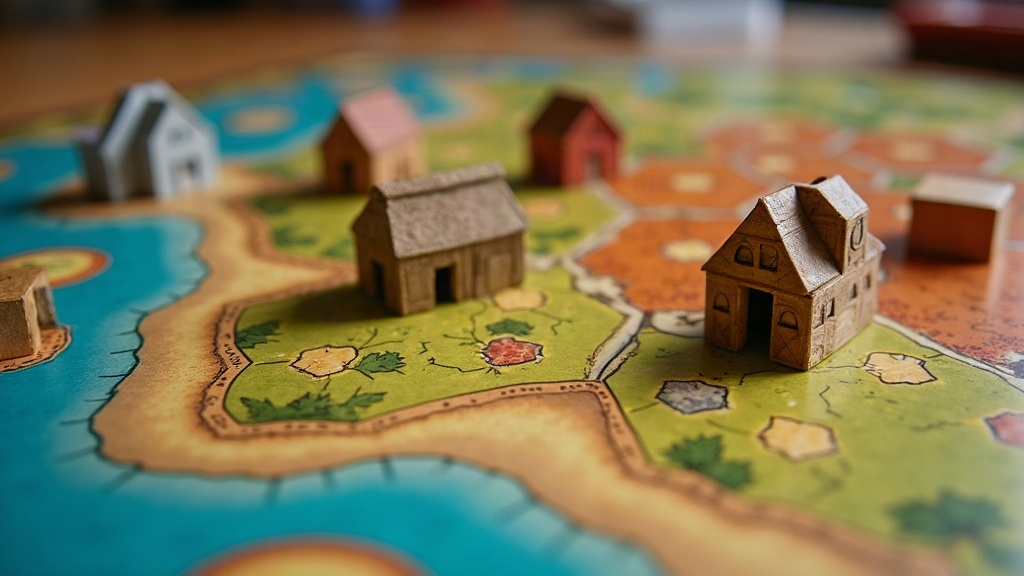
If you’re picking between Catan and Carcassonne for a family of five with a wide age spread (say a 7-year-old, two tweens or teens, and two adults), here’s the short version: Carcassonne is the easier starting point, while Catan offers more long-term strategic depth once everyone’s comfortable with trading and negotiation. Both games are genuinely good. They just solve different problems at the table.
Quick Verdict
- Choose Carcassonne if: your youngest player is under 10, you want shorter games (30-45 minutes), or you’re still new to modern board games.
- Choose Catan if: all five players are 10 or older, you enjoy a bit of negotiation and friendly conflict, and you’ve got 60-90 minutes to burn.
- Own both if: game night is a regular thing at your house. They complement each other well and rarely feel repetitive, even played back to back.
How the Games Actually Play
Carcassonne: Tile-Laying Simplicity
Carcassonne is a tile-placement game, plain and simple. On your turn, you draw a tile, place it to extend the growing landscape of roads, cities, fields, and cloisters, then optionally drop one of your meeples on it to claim a feature. That’s the whole turn. No dice, no resource math, no trading back and forth.
That simplicity is exactly why it works so well for mixed-age families. A 7-year-old gets “put the tile down, maybe put your little person on it” almost instantly, while an adult can quietly layer in smarter meeple placement and farm scoring once they’ve played a few rounds. Beginner mistakes rarely tank a game, and turns move quickly, so younger kids aren’t left staring at the ceiling waiting for their turn.
Catan: Resource Trading and Negotiation
Catan runs on collecting resources (wood, brick, wheat, ore, sheep) based on dice rolls, then trading those resources with other players to build roads, settlements, and cities. The real tension, and honestly the real fun, comes from negotiation: talking someone into swapping ore for wheat, or deciding whether to block an opponent’s expansion with the robber just to slow them down.
This is exactly where Catan gets tricky for younger kids. Understanding probability (why 6 and 8 show up constantly while 2 and 12 barely appear), juggling a hand of resource cards, and negotiating fairly with a sibling who’s not above a little manipulation takes more cognitive and social maturity than most 7- or 8-year-olds have yet. Most families find Catan really clicks once the youngest is somewhere around 10 to 12.
Age-by-Age Breakdown
| Age Group | Carcassonne | Catan |
|---|---|---|
| 6-9 | Great fit | Too abstract; trading confuses them |
| 10-13 | Great fit, may want more depth | Good fit, especially with a patient adult explaining trades |
| Teens/Adults | Fun but can feel light after many plays | Excellent; replay value stays high |
Game Length and Attention Spans
With five players, downtime between turns is the real hidden cost of any board game night. Carcassonne turns are fast: place a tile, place a meeple, done. Even with five people around the table, the game rarely drags. Catan turns can stretch out when players start negotiating multiple trades at once, which adults find engaging but which can lose a young kid’s attention fast if they’re not part of the deal-making.
Practical tip: for Catan with kids in the mix, make the youngest player an active “co-negotiator” paired with an adult rather than handing them a full turn to run solo. It keeps them involved without grinding the whole table to a halt.
Replayability and Long-Term Value
Carcassonne holds up over dozens of plays because the tile layout is never quite the same twice, and there are plenty of expansions (Inns & Cathedrals, Traders & Builders) that add complexity gradually as your kids get older. It’s a game that can genuinely grow alongside your family for years without needing to be replaced.
Catan also has solid replay value, thanks to randomized board setups and expansions like Seafarers and Cities & Knights, but its ceiling for strategic depth sits higher. A household of adults and teens will squeeze a lot more long-term mileage out of it than a family still raising young kids will.
Price and Setup
Both games land in the same rough $30-45 range for the base set. Carcassonne setup takes under a minute: shuffle the tiles, place the starting tile, and you’re off. Catan setup runs 5-10 minutes for your first several games, since the hexagonal board and number tokens need arranging, though this speeds up noticeably once you’ve done it a few times.
Our Recommendation for a Five-Person Mixed-Age Family
Start with Carcassonne as your family’s go-to, any-night, any-age game. Once your youngest is reliably past 10, bring Catan into rotation for weekend game nights, when there’s more time and patience on hand for negotiation. Together they cover everything from a casual Tuesday evening to a proper strategic showdown, and neither one wears thin after a dozen plays.
Bottom line: Carcassonne wins on accessibility and speed; Catan wins on depth and replayability once your players are a bit older. For a mixed-age family of five, keeping both boxes in the closet is really the smart move.