How to Keep Card Sleeves From Sliding Off a Small Table
Why Sleeved Cards Slide So Easily
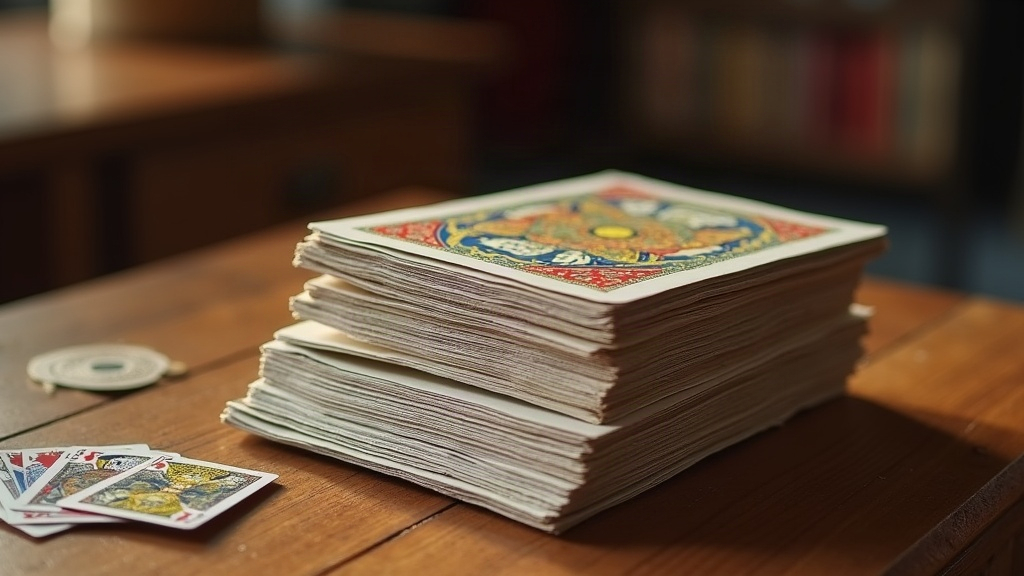
Card sleeves are smooth on purpose. That smoothness is what makes shuffling feel good. But the same slick finish turns into a liability the moment you set those cards on glass, laminate, or polished wood. Add a small table into the mix, and you’ve got trouble: hands, elbows, drink coasters, all bumping into the play area every few minutes, and every little jolt sends your deck skating toward the edge.
Three things tend to pile up and make this worse:
- Not enough table space. Cards get crammed into tight, overlapping zones near the edges, where there’s nowhere for them to go but off.
- Hard, slick tabletops. Glass, varnished wood, plastic folding tables, these all have almost zero friction.
- Lightweight cards in thick sleeves. The extra plastic adds bulk without adding weight, so the card’s grip-to-surface ratio drops.
Quick Fixes You Can Try Tonight
1. Add a Textured Playmat
This is the fix that actually works, every time. A neoprene playmat has a rubberized backing that grips the table, while the fabric top grips the sleeves. Spend $10-15 on one and you’ll notice the difference within the first round. It also cuts down on edge wear, so it’s doing double duty.
No playmat on hand? A felt tablecloth, a yoga mat trimmed to size, even a bath towel will get you through game night in a pinch.
2. Use Table Borders or Rails
Small magnetic or foam rails (the kind sold for RPG or wargaming setups) act like a fence, stopping cards before they reach the edge. Don’t want to buy anything? Try this instead:
- Binder clips holding a strip of cardboard along the table edge
- Painter’s tape forming a raised lip
- Books or box lids stacked around the perimeter
3. Anti-Slip Shelf Liner
Grab a sheet of the rubberized mesh liner people use in kitchen drawers, cut it to fit your table, and you’re set. It’s cheap (a few dollars at most hardware stores), it’s washable, and it grips sleeves just as well as a playmat without the bulk.
4. Weighted Card Trays or Dice Trays
A dedicated card tray with raised edges keeps a hand of cards boxed in one spot. Most have a slightly textured base, so there’s nothing to slide on in the first place, and the raised lip catches anything that tries to skitter off during a shuffle or a reach across the table.
5. Matte Sleeves Instead of Glossy
Already planning to re-sleeve your collection? Go matte. The finish has noticeably more friction than glossy sleeves and holds its position far better, especially paired with a fabric mat underneath.
Table Setup Tips for Tight Spaces
Sometimes the table itself is the real limitation, and no amount of grip solves a layout problem. Rearrange first:
- Angle player zones so each person’s hand sits closer to their body, away from the shared center where most of the bumping happens.
- Use vertical card holders (plastic or wooden stands) instead of laying hands flat. This is a go-to trick for kids’ game nights and crowded tables where flat space is at a premium.
- Designate a discard/draw zone with a small tray or coaster, so loose piles aren’t fighting for the same few inches of flat surface.
- Clear the clutter. Drinks, phones, snack bowls, they all eat up stable space and are usually the real culprit behind accidental nudges, not the cards themselves.
When to Upgrade Your Table
If this happens every single game night without fail, it’s probably worth spending a little money to fix it for good:
- A folding game table topper (36”x36” or bigger) with a fabric surface that sits right on top of your existing table.
- A lazy Susan card mat for games with shared draw or discard piles, which keeps everything centered and cuts down on reach-related slides.
Neither of these costs much, usually under $40, and both solve the problem permanently instead of patching it one game at a time.
Conclusion
Sliding sleeves are a friction problem, not a quality problem with your cards. Throw down a textured mat, box in your play area with a border, or switch to matte sleeves, and the sliding stops almost immediately. If your table is just too small, fix the layout before you buy new furniture: a $10 playmat or a strip of shelf liner solves most of it, and a card tray mops up the rest. Get the setup right, and a cramped kitchen table can host a game night just as stable as any dedicated gaming table.